
India's merchandise exports rose by 9.1 per cent to $38.13 billion in May even as the trade deficit widened to a seven-month high of $23.78 billion during the month, according to government data. Healthy growth in sectors, such as engineering, electronics, pharmaceuticals, textiles and plastics helped register growth in exports despite global economic uncertainties.

'The Indian government is better prepared this time and has reached out to all contenders and not putting all eggs in one basket.'

The Indian IT services sector is staring at a second consecutive year of muted revenue growth due to modest increase in tech spends in Europe and the US, a domestic rating agency said on Wednesday. Crisil Ratings said it expects the sector to grow at 5-7 per cent in FY25, after a growth of 6 per cent estimated to have been achieved in FY24. The overall industry size is pegged at $250 billion and it creates over 50 lakh direct jobs.

Sheikh Hasina, who was elected for a record fourth consecutive term and fifth overall term this year, was always admired by her supporters as "Iron Lady", before the dramatic development that abruptly ended her 15-year-rule in Bangladesh.

ICICI Bank, Axis Bank, Infosys, M&M, Tech Mahindra, Tata Steel, SBI and Maruti were also among the gainers. On the other hand, IndusInd, TCS, Titan and Asian Paints declined.

The market capitalisation of BSE-listed companies soared to an all-time high of Rs 406.52 lakh crore on Monday thanks to a rally in equities where the BSE Sensex climbed over 1 per cent. The 30-share BSE Sensex rallied 941.12 points or 1.28 per cent to finish at 74,671.28. During the day, it zoomed 990.99 points or 1.34 per cent to 74,721.15.

Senior India off-spinner Harbhajan Singh said he is seeking legal advise on the way ahead after BCCI Ombudsman Justice (Retd) AP Shah observed that the bowler should dissociate himself from sports apparel company 'Bhajji Sports', which supplies kits to domestic teams. Shah had investigated the 'Conflict of Interest' issues raised by activist Neeraj Gundey, who had filed a number of such complaints with the 'Office of Ombudsman'. "I have received an e-mail communication from the Board. All I can say at this moment is that I am discussing the issue with my legal advisor. I will act according to his advice," Harbhajan told PTI on Thursday. The company 'Bhajji Sports' is owned by Mrs Avtar Kaur, who is the cricketer's mother. When a senior BCCI official was asked, he said that if Harbhajan is not the owner, anyone else can run the company, he said: "As long as Harbhajan's name does not feature among the owners of the company in any of the deeds, he will not be under the Conflict of Interest purview."

Trawling back into the past, she said her family had an elephant mahal, where the jumbos were kept in large numbers after being tamed and domesticated.

'The Indian private sector knows how to build and run educational organisations, what is needed is a large dose of removal of restrictions.' 'Government restrictions hold back universities in India from launching medical schools,' argue Ajay Shah and Vijay Kelkar.

'2019 was fought on delivery. But in 2024, you can see the before and after effects.'
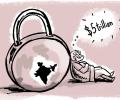
India decisively withstood global headwinds in 2023 and is likely to remain as the world's fastest-growing major economy on the back of growing demand, moderate inflation, stable interest rate regime and robust foreign exchange reserves. Despite widespread pessimism witnessed among the developed nations and the worsening geopolitical situation, India recorded a gross domestic product (GDP) expansion of 6.1 per cent in the March quarter. The growth moved up to 7.8 per cent in the June quarter and was 7.6 per cent in the September quarter. For the first six months of this fiscal, the growth was 7.7 per cent.

We asked colleagues, present and past, to reflect on a man who has made such a difference to their lives and careers. Here it is then, a rich collection of memories that offer enchanting glimpses of the enigmatic Ajit Balakrishnan.

'While Indian markets are indeed not inexpensive, the valuations of largecap stocks are still a considerable distance from being overstretched.'

The Centre is unlikely to offer new direct tax incentives for units operating in special economic zones (SEZs) and may instead allow the grandfathering of previous exemptions that such units were entitled to, according to proposed amendments to the SEZ Act, 2005, people aware of the matter said. The amendments, proposed by the commerce department, will soon be considered by the Cabinet for approval. This represents a departure from the department's earlier plan to introduce these changes through the Development Enterprises and Services Hubs (DESH) Bill, 2023, which faced strong criticism from the ministry of finance.
The strategic sale of government and state-owned Life Insurance Corporation (LIC) of India stakes in IDBI Bank might encounter procedural delays, potentially pushing the timeline for expected financial bids to the third quarter of the current financial year (2023-24, or FY24), according to sources familiar with the development. Financial bids constitute the second significant step in the divestment process, following expressions of interest (EoIs) from potential bidders. In this phase, bidders are required to quote transactional fee as a percentage of the divestment proceeds, which are then added to the government's kitty after completion of the transaction.

While India won't be immune to global spillovers, we need to create the macro preconditions for sustained growth. Policy agility, prudence, and resilience will be key, suggests Sonal Varma.

Smaller stocks have emerged as Dalal Street's favourites in 2023 that has turned out to be a "great year" for equities, rewarding investors with big gains, driven by optimism over the country's macroeconomic fundamentals and heavy retail investors participation. Experts said equity markets are experiencing a prolonged bull run and it is during this time that the midcap and smallcap segments tend to outshine their larger counterparts. Till December 22 this year, the BSE smallcap gauge has jumped 13,074.96 points or 45.20 per cent while the midcap index has surged 10,568.18 points or 41.74 per cent.

'Historically, the markets tend to perform well during election years as governments aim to increase spending and call attention to growth.'

The unexpected missile attack on a second India-bound ship carrying Russian crude, just three weeks after the first, has complicated matters for domestic refiners. India now counts the Vladimir Putin-led nation as its biggest oil supplier, according to Paris-based market intelligence agency Kpler, and these attacks come on top of US sanctions since December, where vessels that bring crude to India are facing heightened scrutiny. Panama-registered Pollux, which loaded crude at the Sheshkaris oil terminal in the Russian port of Novorossiysk on January 24, was scheduled to deliver the medium, sour Urals grade to Paradip port on February 28.

This may be in line with Russia's private military company, Wagner Group, which was controlled until 2023 by Yevgeny Prigozhin, a former close ally of Russia's president Vladimir Putin. The group used the infrastructure of the Russian Armed Forces.

'In Eastern Ladakh the Chinese attempted salami slicing.' 'Our response has been superb. Our military has responded magnificently.'

Among the Sensex firms, UltraTech Cement, Reliance Industries, ICICI Bank, HDFC Bank, Bharti Airtel, IndusInd Bank, State Bank of India, Tata Consultancy Services, Larsen & Toubro, Kotak Mahindra Bank and State Bank of India were the major gainers. In contrast, Tata Motors, Maruti, Axis Bank, Mahindra & Mahindra, ITC, NTPC, Tata Steel and Bajaj Finserv were the major laggards.

India has emerged as a 'major power' by achieving outstanding results in economic development and social governance and its transformation as a stronger, assertive country has made it a 'new geopolitical factor', according to a commentary by a Chinese scholar in a state-run newspaper in Beijing.

Benchmark stock indices Sensex and Nifty fell for the third day running on Friday due to weak trends in global markets and soaring crude oil prices. Foreign fund outflows also weighed on investor sentiments amid strengthening US bond yields which are nearing 5 per cent for the first time since 2007. The 30-share BSE Sensex fell 231.62 points or 0.35 per cent to settle at 65,397.62.

A combination of strong earnings and economic growth, and hopes of the Federal Reserve ending the rate-hike cycle have pushed gross buying of Indian equities by foreign portfolio investors (IPO) to a new high. In 2023, FPIs have been gross buyers of shares worth Rs 25.5 trillion, the highest ever in a calendar year. FPIs also sold shares worth Rs 23.9 trillion. On a net basis, they were net buyers to the tune of Rs 1.6 trillion, the highest since 2020.

The value of foreign portfolio investment (FPI) in Indian equities was at $542 billion in the March quarter of 2023, a decline of 11 per cent from the preceding year, largely due to the exodus of foreign money from the domestic market, according to a Morningstar report. In comparison, the value of FPI in Indian equities was $612 billion in the January-March quarter of 2022. On a quarter-on-quarter basis, the value of FPI in Indian equities fell by 7 per cent from $584 billion recorded in the three months ended December 2022.

Prices may go up because of higher energy costs, caused by the rise in shipping charges, with commercial vessels taking a longer route to avoid the troubled Red Sea region, the finance ministry said on Monday. Iran-backed Houthi rebels of Yemen are repeatedly attacking ships in the Red Sea. While the global economy is grappling with challenges such as sticky inflation, sluggish growth, and mounting fiscal pressure, India's external sector could face "potential risks" due to the ongoing geopolitical tensions, according to the finance ministry's report on the review of the Indian economy.

'To the believers of crypto regulations, I have only one question to ask, how will you regulate it?'

According to experts, one of the primary causes of toxic behaviour is a lack of adulting in men and women.

The Indian rupee may remain under depreciation pressure on account of plateauing of exports and subsequent widening of the current account deficit, said the Economic Survey 2022-23 tabled in Parliament on Tuesday. It said the "risks to the current account balance stem from multiple sources". The country's current account deficit (CAD) widened to 4.4 per cent of the GDP in the quarter ended September from 2.2 per cent in April-June due to higher trade gap, as per latest data of the Reserve Bank of India.

Union minister Smriti Irani reacted furiously to the Congress leader's barb at the prime minister over the Rafale purchase and the tense situation in Manipur.

NRAI is considering the requests of several pistol and rifle shooters to compete in season-opening ISSF World Cup in Cairo in January a day after deciding not to send the contingent.

US authorities have been scrambling to establish how many Americans have been killed or taken hostage in the conflict.

The responsibility for peace in Ukraine now rests in the hands of the two principal belligerents, Russia and the US, and the prime victim of this great power rivalry, Ukraine, points out Nitin Desai.

After withdrawing record funds in 2021-22, foreign portfolio investors (FPIs) continued their sell-off in the last fiscal too and pulled out Rs 37,631 crore from Indian equities amid aggressive rate hikes by central banks globally. The outflow trend is likely to reverse in the current financial year since India has the best growth potential in the financial year 2023-24 (FY24), VK Vijayakumar, chief investment strategist at Geojit Financial Services, said. Market analysts believe that FPI flows in the current financial year would be decided by a host of factors, such as the US Federal Reserve's policy stance, oil prices movement and development in the geopolitical situation.

Foreign Secretary Vinay Kwatra on Wednesday refused to speculate on whether the G20 foreign ministers' meeting would be able to come out with a joint communique against the backdrop of widening differences between the West and Russia on the Ukraine conflict.

Corporate margins and profits in India remain vulnerable to changes in crude oil prices in the international market. Historical quarterly data from listed companies (excluding banks, finance and insurance, oil and gas, and power sectors) indicate an adverse correlation between corporate margins and crude oil prices.

The Reserve Bank of India on Thursday opted for a pause second time in a row, maintaining key benchmark policy rate at 6.5 per cent as inflation moderates. The rate increase cycle was paused in April after six consecutive rate hikes aggregating to 250 basis points since May 2022. Announcing the bi-monthly monetary policy, RBI Governor Shaktikanta Das said the Monetary Policy Committee (MPC) unanimously decided to keep the rate unchanged at 6.5 per cent.
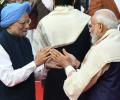
While Narendra Modi spent fewer days abroad than his predecessor -- 275 days versus Dr Singh's 306 - he has travelled more widely than any other Indian PM.
Some experts feel that Israel got so totally engrossed in countering Iran and in efforts to foil the Islamic Republic's nuclear programme that it has neglected its own backyard.
